“The new commissioner of the city’s child welfare system has a tough job ahead of him — the agency receives some 60,000 calls a year reporting child abuse or neglect, and like all city agencies, the department has to manage with a tight budget.”
Behind the Scenes:
Stories that talk generally about victims are often very difficult to put together for TV. We have to have some sort of visual to help carry the narrative, but at the same time, we have to be careful not to associate innocent unrelated people to the actual victims. It’s a struggle. I was lucky with this story, in that I had a chance to shoot non-descript b-roll at a local day care center.
When I don’t have this kind of luxury, I resort to an old standby – the face blur. Andy’s Region Blur is a fantastic (free!) tool for Final Cut Pro. I’ve found it very fast and versatile. It’s very easy to apply a blur to a face and add keyframes to compensate for motion in the shot.
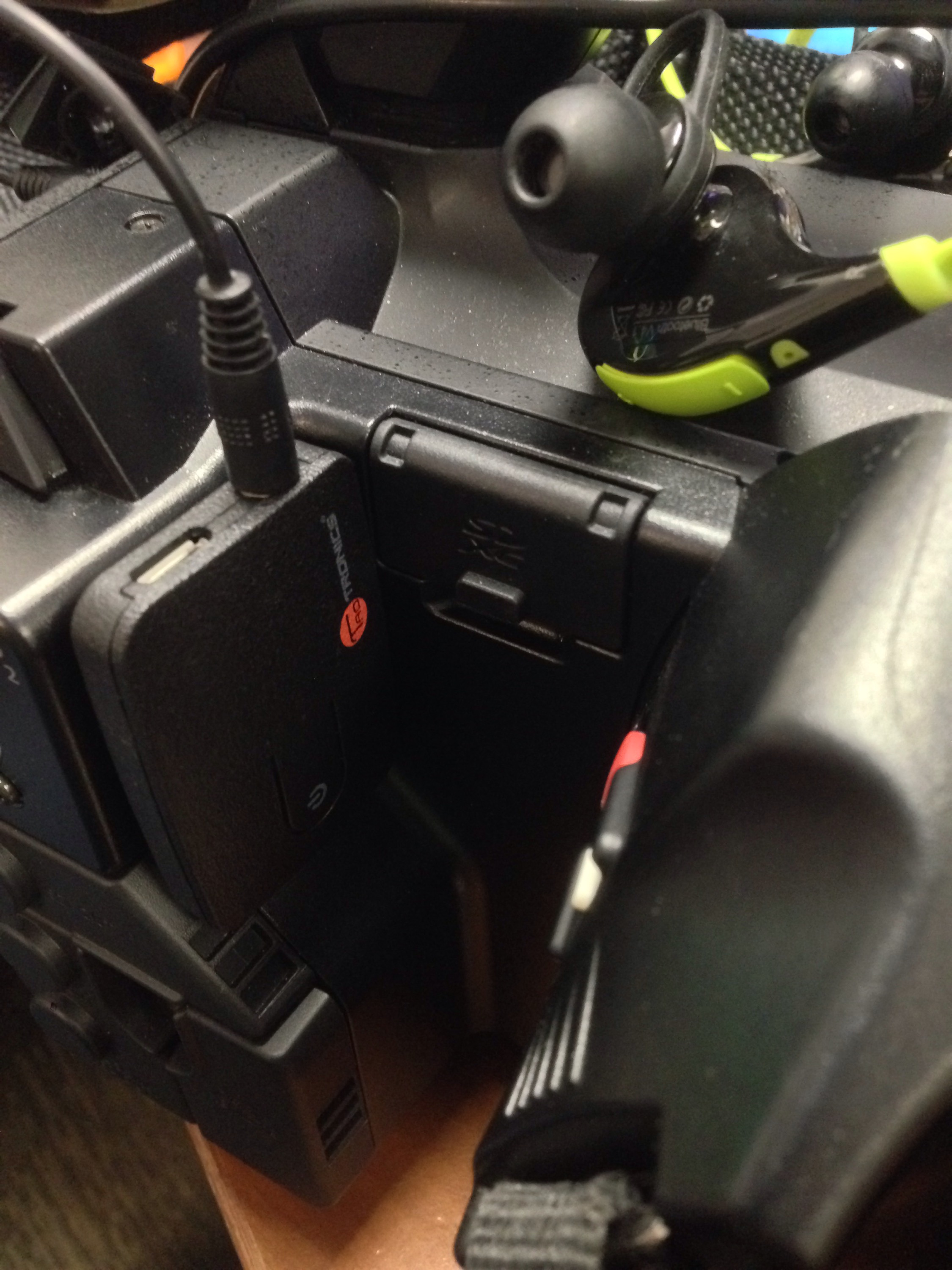
The interview with the ACS Commissioner was shot on a Panasonic HPX-170. The lighting setup was pretty simple, just a Lowel Pro Light (softened down with a white umbrella), a small LED inside the table lamp, and another small LED (daylight balanced) kicking up the stone fireplace in the background.
“The mandatory evacuation of Zuccotti Park overnight seemed to come out of nowhere — but the story actually starts on Sunday. Here’s a timeline of the surprise sweep.”
For weeks you couldn’t turn on the news without hearing “Occupy Wall Street.” The NYPD had orders to sweep the OWS encampment in Lower Manhattan, and a lot happened over the passing hours. I was asked to compile a timeline of events, as a recap for our 5pm newscast. The goal here was to use the amazing video we were able to gather and show the steady progression through the night.
Behind the scenes:
The piece was cut with a combination of Final Cut Pro and Apple Motion. Essentially, it was edited in Motion, but the graphics program isn’t really built to be an NLE. Once I had the voiceover track I basically edited a straight cuts video package in FCP. This helped me organize the footage and time it to the key points in the story.
Once I had that timeline laid out, I dragged the ENTIRE sequence into Motion. There, I built a skeleton of the timeline graphic that frames the piece and placed the video in the appropriate “time windows” (well, what else would you call them?). With everything in the right spot I used Motion’s 3d camera tools to move in and out of the timeline graphic. A couple of hundred keyframes later…
One group of firefighters on Long Island is using fire trucks to raise awareness and money to help women nationwide battling breast cancer.
The story was actually originally pitched to me by Paul Brower, one of my fellow firefighters from Woodmere. It was a long shoot, but altogether a very inspiring day. The image of these pink fire trucks racing around Nassau County really moved people to the cause.
Some behind the scenes info:
The pieces was shot on a Canon 7D. I used a Sigma 30mm f1.4 for the interviews. It’s really a beautiful lens that puts out a wonderfully crisp image. The wide aperature was relly helpful in shooting the b-roll at the fire station. The available light was pretty low in some areas; shooting at f1.4 allowed me to grab the shots without pumping up the ISO (gain).
Because the camera was shooting in 1080p I was able to crop the interview shots in post to provide some differences in framing. Audio was recorded on a Tascam DR-100 and synced up later in post.
I was asked to put together a short recap of the services at ground zero on 9/11 2011. Paul Simon performed this as part of the ceremony, and I felt it was a fitting way to frame the events of the day.
Audio tapes just released tell the events of 9/11 through the voices of air traffic controllers. Others also on the tape include Mohamed Atta, the terrorist who took control of American Airlines Flight 11.In one chilling moment Atta keys up on the radio and says – “we have some planes.”
When presented with this story, I felt that the we needed to express the impact of the words. We all know what happened that day, and this was an opportunity to look at it from a different point of view. The choice for simple white on black text was a bit controversial, but in the end I think it was the right choice. If I would have married the tapes with pictures that we’re all too familiar with, I feel it would have lessened the impact of what the air traffic controllers were saying.
“A Sunset Park hotel looking to attract a young and hip crowd plans to play music around the clock to set itself apart but neighbors are concerned with the noise level and the crowds the new hotel may attract.”
It’s one of the most exhilarating and frustrating aspects of the news business. One-day turns. For the uninitiated, that’s pitching a story, setting it up. shooting it, writing it, and cutting it, all in one day, all under deadline. Sounds fun, right?
In the film world, these quick turnarounds could be borderline offensive to some, but I look at them as a challenge. Tell an engaging story that will hook a viewer, and get it all done in 7 hours. Now, don’t get me wrong, I absolutely love the idea of being able to finess a shot and collaborate with dozens of artists and technicians for hours, days, and weeks. That attention to detail is one of the things I really love about filmmaking. When I was on the lighting crew for ‘Holy Rollers‘ I remember spending several hours lighting up a hallway shot that maybe got 20 seconds of screen time… and of course the shot looked GREAT, and it moved along the story – objective complete, money well spent. But, if there’s one thing that news has taught me, it’s that the shot needs to look great and help move along the story – even when you don’t have hours and an army of craftsmen to make it happen.
This story was one of those “day of air” jobs.
It piqued some interest when someone mentioned it in our morning story meeting, after which I was asked to get the story done for “slot.” After that it was a mad rush to get the elements and put it all together. One of the most challenging things about this is the need to become an “instant expert.” I had to meet with this hotel owner, and in the time it took the “D” train to get from 30 Rock to Sunset Park, I had to have enough information to question the DJ about his motivations, zoning restrictions, local community reaction, and much more. This was a fairly easy one. It amazes me when I see reporters wrap their heads around issues like the global economic downturn, and have to become instant experts on the subject before the tally light on the camera flicks on at 4:59 pm.
If all of this sounds stressful, well, it is at times, but it’s also invigorating to go out and meet people everyday. To hear their stories and then use our gear to help communicate that story to others. In the end, that’s what it’s about. Whether it’s on a massive film set, or a small street corner under the Gowanus Expressway, we have to push our resources to their limit to create something that will get a reaction from the person on the other end of the tube.